
Back to Blogs

Invisalign® Aligners Myths vs. Facts

Understanding the facts about Invisalign® aligners helps patients make informed decisions for a straighter, more confident smile.

October 8, 2026
•
2 min read
A man in a navy t-shirt stands in a kitchen, holding a clear dental aligner in one hand and a glass of water on a wooden counter.
Back to Blogs

Invisalign® Aligners Myths vs. Facts

A man in a navy t-shirt stands in a kitchen, holding a clear dental aligner in one hand and a glass of water on a wooden counter.

Understanding the facts about Invisalign® aligners helps patients make informed decisions for a straighter, more confident smile.

October 8, 2026
•
2 min read

Invisalign® Aligners: Myths vs. Facts

Clear aligners have revolutionized orthodontics, offering a discreet alternative to traditional braces for many adults and teens seeking a straighter smile. These custom-made, virtually invisible trays gently shift teeth into their ideal positions over time. While highly effective, many misconceptions still surround this popular treatment option, making it important to understand the reality.

Mark, a man in his early 40s, had always been self-conscious about his slightly misaligned front teeth. He often found himself covering his mouth when he laughed, wishing for a more confident smile.

He had considered braces in his younger years but decided against them, put off by their appearance. Now, with a new professional role that involved frequent public speaking, Mark felt a renewed urgency to address his smile. He’d heard about Invisalign® treatment but was unsure if it was right for him, burdened by various stories he'd picked up from friends and online forums. He decided to schedule a consultation at LS Smiles to get the real facts.

Mark sits at a light wood desk, writing on a notepad, looking thoughtfully up and to the right, while a woman in a dark blazer sits across from him, smiling and looking left.

How Do Clear Aligners Work?

Invisalign® aligners work by applying gentle, consistent pressure to guide teeth into their desired positions, a sophisticated process that begins with a detailed 3D scan of the patient's mouth. This advanced digital mapping allows Dr. Leeza Stein to meticulously plan every stage of tooth movement from start to finish. Each set of aligners is precisely calibrated to achieve specific, minor shifts, moving teeth just a fraction of a millimeter.

Mark learned that his journey would involve a series of custom-designed aligners, typically changing to a new set every one to two weeks. Dr. Stein explained how the aligners are crafted from a smooth, comfortable, BPA-free plastic. This material is designed to fit snugly over the teeth, providing the necessary forces for movement.

Dr. Stein clarified that the success of Invisalign® treatment largely depends on patient compliance. Consistent wear is crucial for the aligners to work effectively. She outlined the key aspects of treatment:

  • Wear Time: Aligners must be worn for 20 to 22 hours per day to be effective.
  • Removable for Meals: Patients can remove aligners for eating, drinking, brushing, and flossing.
  • Regular Check-ups: Periodic appointments with Dr. Stein are necessary to monitor progress.
  • Oral Hygiene: Maintaining excellent oral hygiene is essential throughout the entire treatment.
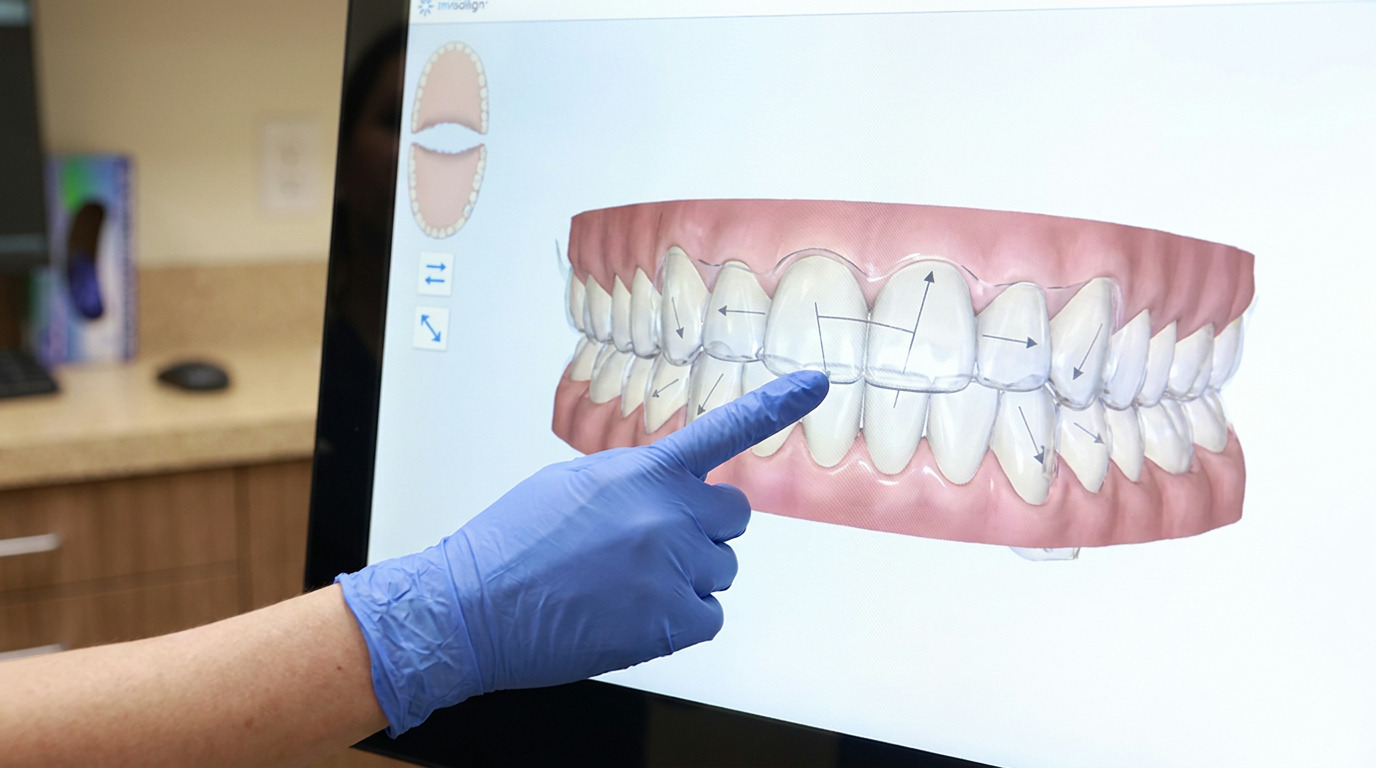
A gloved hand points to a digital screen showing a 3D model of teeth with clear aligners and arrows indicating tooth movement, in a dental office setting.

Can Invisalign® Fix All Problems?

While Invisalign® aligners are remarkably versatile and effective for a wide range of orthodontic issues, they are not a universal solution for every single malocclusion. Dr. Stein explained to Mark that clear aligners excel at correcting problems like crowding, spacing, and many bite irregularities. The technology is advanced enough to handle many complex cases.

Mark wondered if his specific alignment issues were suitable, having heard that Invisalign® was only for "minor tweaks." Dr. Stein assured him that his case of mild crowding and a slight overbite was indeed a great candidate for Invisalign® treatment. She reviewed the types of conditions that clear aligners can successfully address.

She noted that cases requiring significant rotations, vertical movements, or extremely severe bite discrepancies might necessitate different approaches. However, technological advancements continue to expand the scope of clear aligner efficacy. Here are common issues Invisalign® effectively treats:

  • Crowding: When teeth overlap due to lack of space.
  • Spacing: Gaps between teeth.
  • Overbite: Upper front teeth bite too far over the lower front teeth.
  • Underbite: Lower front teeth extend too far forward past the upper front teeth.
  • Crossbite: Some upper teeth bite on the inside of the lower teeth.
  • Open Bite: Upper and lower front teeth do not meet when the mouth is closed.
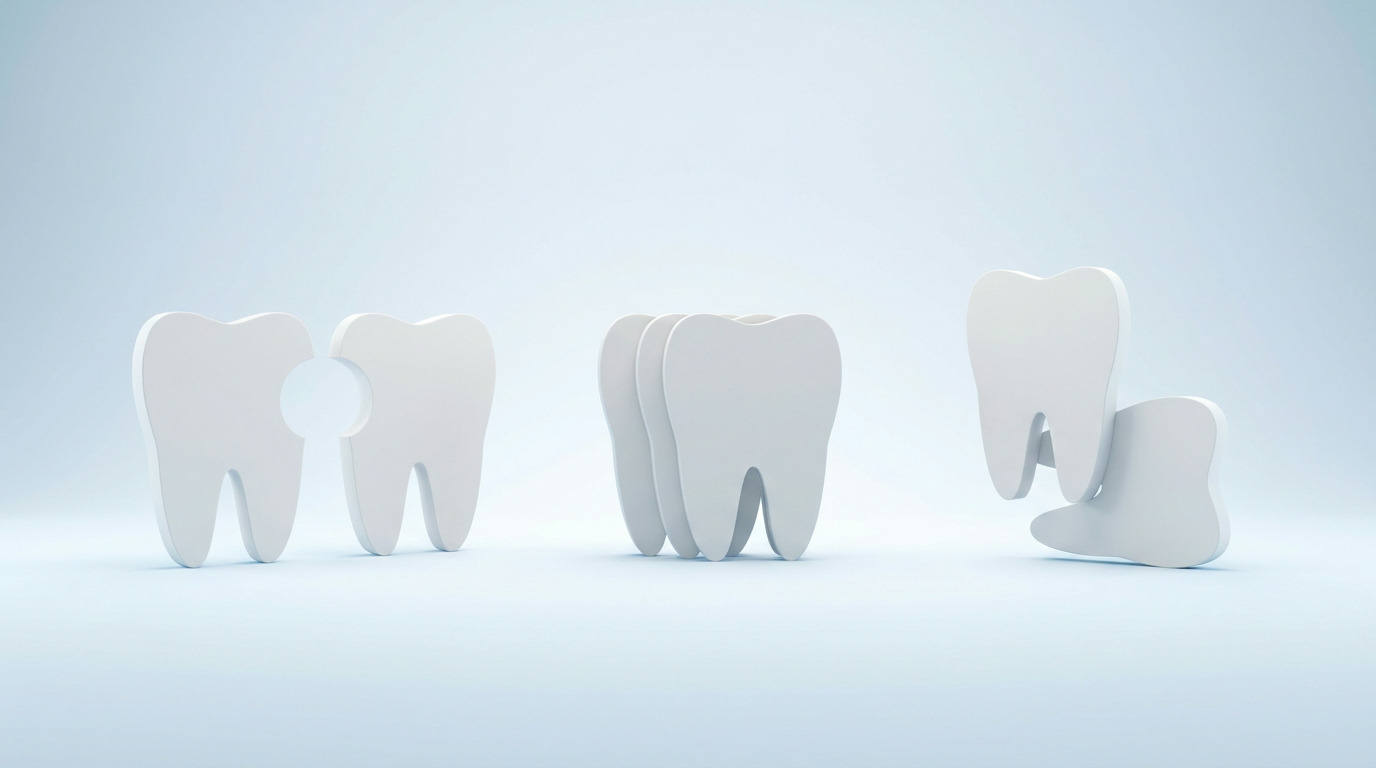
Three groups of simplified white tooth shapes are arranged on a light blue background: two teeth with a circular gap, three stacked teeth, and one tooth positioned above another.

Is Treatment Uncomfortable or Painful?

Many patients express concern about potential discomfort with orthodontic treatment, and Mark was no exception, recalling stories from friends about painful braces adjustments. Dr. Stein clarified that while some pressure or mild soreness is normal, significant pain is rare with Invisalign® aligners. The experience is generally quite manageable. This sensation typically occurs for a day or two after switching to a new set of aligners as the teeth begin to shift.

The smooth plastic material of Invisalign® aligners minimizes irritation to the cheeks and gums, a common complaint with traditional metal braces. Unlike brackets and wires, there are no sharp edges to rub against soft tissues. Mark appreciated this detail, imagining a much smoother experience than his friend Patrick had described with traditional braces.

Dr. Stein suggested that any initial discomfort is a sign that the aligners are actively working to move the teeth. She recommended over-the-counter pain relievers if needed, along with temporarily eating softer foods. This gentle, consistent force contrasts sharply with the abrupt tightening associated with conventional orthodontic systems.

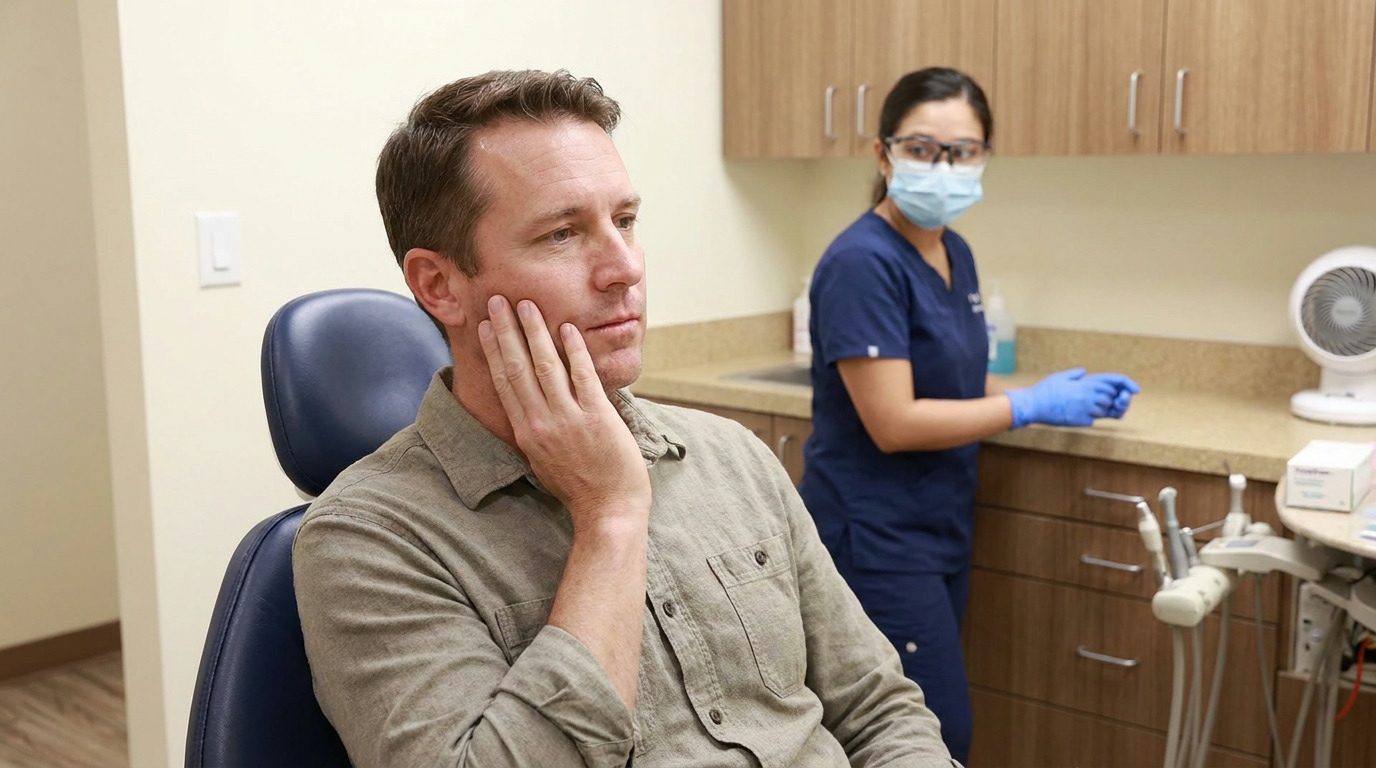
Mark sits in a dental chair, touching his cheek, while a dental professional in scrubs, mask, and gloves stands by a counter in the background.

Ready for Your Smile Transformation?

If you're considering clear aligners and have questions about whether Invisalign® is right for you, we invite you to connect with Dr. Leeza Stein at LS Smiles in Rockwall, TX. Our team is dedicated to providing personalized care and helping you achieve the confident, healthy smile you deserve. Schedule a consultation to explore your options.

How Long Does Invisalign® Take?

The duration of Invisalign® treatment varies significantly from patient to patient, influenced by the complexity of the case and individual adherence to wearing the aligners. There is no single, fixed timeline that applies to everyone. Dr. Stein explained that Mark's treatment plan would likely fall within an average range, but his commitment to wearing the aligners would be key. She emphasized the importance of wearing the aligners for the prescribed 20-22 hours daily.

For many adults, the average treatment time with Invisalign® is 12 to 18 months. However, simpler cases might conclude in as little as six months, while more complex alignments could extend to two years or even slightly longer. Another patient of Dr. Stein's, Mark, completed her mild spacing correction in just eight months.

Mark was relieved to hear that his case, which Dr. Stein assessed as moderate, would likely be on the shorter side of the typical range. The digital treatment plan, called ClinCheck®, allows both Dr. Stein and the patient to visualize the projected tooth movements and the expected timeline from the outset. Key factors influencing treatment length include:

  • Case Complexity: The severity of crowding, spacing, or bite issues.
  • Patient Compliance: Consistent wear of aligners as prescribed.
  • Individual Biology: How quickly a patient's teeth respond to movement.
  • Attachments and Elastics: The need for additional aids to facilitate specific movements.
An hourglass with sand falling is next to a row of clear dental aligners on a light background.

Can You Eat & Drink Normally?

A significant advantage of Invisalign® aligners over traditional braces is the freedom they offer when it comes to diet. Unlike fixed appliances that require strict avoidance of certain foods, clear aligners are designed to be removed before eating or drinking. This means patients can continue to enjoy all their favorite foods without restriction. Mark had heard horror stories from his cousin about food getting stuck in her braces.

Dr. Stein emphasized the importance of removing the aligners for all meals and snacks. This prevents damage to the aligners and keeps food particles from getting trapped between the aligners and teeth. After eating, brushing the teeth and rinsing the aligners thoroughly before putting them back in is crucial for maintaining oral hygiene and preventing cavities.

She also advised Mark to only drink water while wearing his aligners. Sugary or acidic beverages, such as soda, juice, coffee, or tea, can get trapped, leading to staining of the aligners and an increased risk of tooth decay. Hot beverages can also warp the aligner material. This simple rule helps protect both the aligners and the teeth throughout the treatment period.

Mark sits at a restaurant table, smiling and holding a clear dental aligner over a partially eaten salad and glass of water.

What Happens After Invisalign®?

Completing the final set of Invisalign® aligners marks a significant milestone, but it is not the absolute end of the orthodontic journey. To ensure the newly aligned teeth remain in their corrected positions, a critical retention phase follows. Dr. Stein explained to Mark that this stage is just as important as the active treatment itself to prevent relapse. Retention is key to maintaining a beautiful, lasting smile. Without it, teeth can gradually shift back toward their original positions.

Typically, this involves wearing a retainer, either removable or fixed, for a specified period. The type and duration of retainer wear are customized to each patient's needs and the specifics of their case. One longtime patient, Mark, now wears her retainers only at night, years after her Invisalign® treatment.

Dr. Stein offers various options for retention, often recommending Vivera® retainers, which are custom-made, clear, and durable. Mark understood that this final step was non-negotiable for protecting his investment in his smile. Understanding these post-treatment steps is vital for long-term success. Common retention methods include:

  • Removable Retainers: Worn primarily at night, these are custom-fit trays or wires.
  • Fixed Retainers: A thin wire bonded to the back of the front teeth, offering continuous retention.
  • Long-Term Wear: Initially, retainers are often worn full-time, then transition to nighttime use indefinitely.
A clear dental retainer rests on a white cloth next to a glass of water on a wooden nightstand, with a lamp and bed in the background.

Your Confident Smile Journey

Mark's journey from skepticism to understanding truly highlighted how beneficial informed decisions are when considering orthodontic treatment. He arrived with a head full of common myths and left with a clear picture of how Invisalign® aligners could transform his smile and his confidence.

Dr. Leeza Stein's detailed explanations dispelled his fears about discomfort, effectiveness, and the practicalities of daily wear. He learned that clear aligners are a sophisticated, patient-friendly solution for many, offering a discreet path to a healthier, straighter smile without the aesthetic drawbacks of traditional braces.

His initial hesitation about the commitment involved melted away as he understood the flexible nature of being able to remove the aligners for meals and special occasions. The promise of maintaining his dietary habits was a significant relief. Moreover, learning about the crucial retention phase reassured him that his efforts would result in a lasting transformation, preventing any disappointment from teeth shifting back.

With a clear understanding of the process, including the expected timeline and what to anticipate post-treatment, Mark felt genuinely excited to embark on his smile journey. He recognized that while dedication was required, the benefits of a confident smile, both personally and professionally, far outweighed any minor inconveniences. His experience with Dr. Stein at LS Smiles underscored the value of expert guidance in navigating treatment options.

Mark smiles at the camera, wearing a blue shirt and dark blazer, with three blurred colleagues in an office meeting room behind him.
Categories:
No items found.

Frequently Asked Questions

1. Is Invisalign® really invisible?
While not entirely invisible, Invisalign® aligners are made from clear, thin plastic that is very discreet and significantly less noticeable than traditional metal braces. Most people will not notice you are wearing them, especially from a conversational distance.

2. Can Invisalign® affect my speech?
Some patients may experience a slight lisp or speech impediment during the first few days of wearing new Invisalign® aligners. This is a temporary adjustment as the tongue adapts to the presence of the aligners in the mouth, and it typically resolves quickly.

3. Do I need to wear a retainer after Invisalign® treatment?
Yes, wearing a retainer after completing your Invisalign® treatment is crucial for maintaining your new smile. Retainers prevent your teeth from gradually shifting back to their original positions, ensuring your results last a lifetime.

4. How often do I change my Invisalign® aligners?
Typically, patients switch to a new set of Invisalign® aligners approximately every one to two weeks, as directed by Dr. Leeza Stein. Each new set is designed to continue the gentle progression of tooth movement according to your personalized treatment plan.

5. Can I whiten my teeth during Invisalign® treatment?
It is generally advised to wait until after your Invisalign® treatment is complete before undergoing professional teeth whitening. Dr. Leeza Stein can discuss KöR® Teeth Whitening options once your teeth are perfectly aligned.

6. What happens if I lose an Invisalign® aligner?
If an Invisalign® aligner is lost or damaged, it is important to contact LS Smiles immediately. Dr. Leeza Stein will advise whether to move to the next aligner set, go back to the previous one, or order a replacement to avoid delaying your treatment progress.

Visit Us Today

We're conveniently located in Rockwall, TX and offer flexible scheduling to accommodate your busy life.

OFFICE LOCATION

1300 E Ralph Hall Pkwy # 114
Rockwall, TX 75032

Office Hours

Mon - Thu: 8:30 AM - 4:30 PM
Fri: 8:00 AM - 12:00 PM (Admin Hours)
Sat-Sun: Closed

Contact

(972) 771-2213
office@lssmiles.com

Book An Appointment

Thank you for booking your appointment!

We’ve received your request and will contact you soon to confirm the details. We look forward to seeing you at iSmile Dental Care!

Oops! Something went wrong while submitting the form.
RELATED BLOG POSTS

Stay Informed with Expert Insights & Tips About Dental Care

9.16.2026

What to Expect With Invisalign® Treatment

Invisalign® treatment uses custom clear aligners to gradually straighten teeth, offering a discreet and comfortable alternative to traditional braces for a confident smile.

READ MORE
9.10.2026

Do You Need a Dental Crown? Five Signs

Dental crowns are essential restorations for damaged or decayed teeth, restoring function, strength, and appearance for lasting oral health.

READ MORE
8.7.2026

What Qualifies as a Dental Emergency?

Recognizing dental emergency symptoms like severe pain or a knocked-out tooth and seeking immediate professional care is crucial for protecting your oral health.

READ MORE
BEGIN YOUR EXPERIENCE

Start Your Smile Transformation Today

Discover why thousands of Rockwall, TX, families trust us with their dental care. Schedule your appointment today and experience luxury dental care that's thoughtfully delivered.