1. How does All-on-4® compare to traditional implant dentures cost?
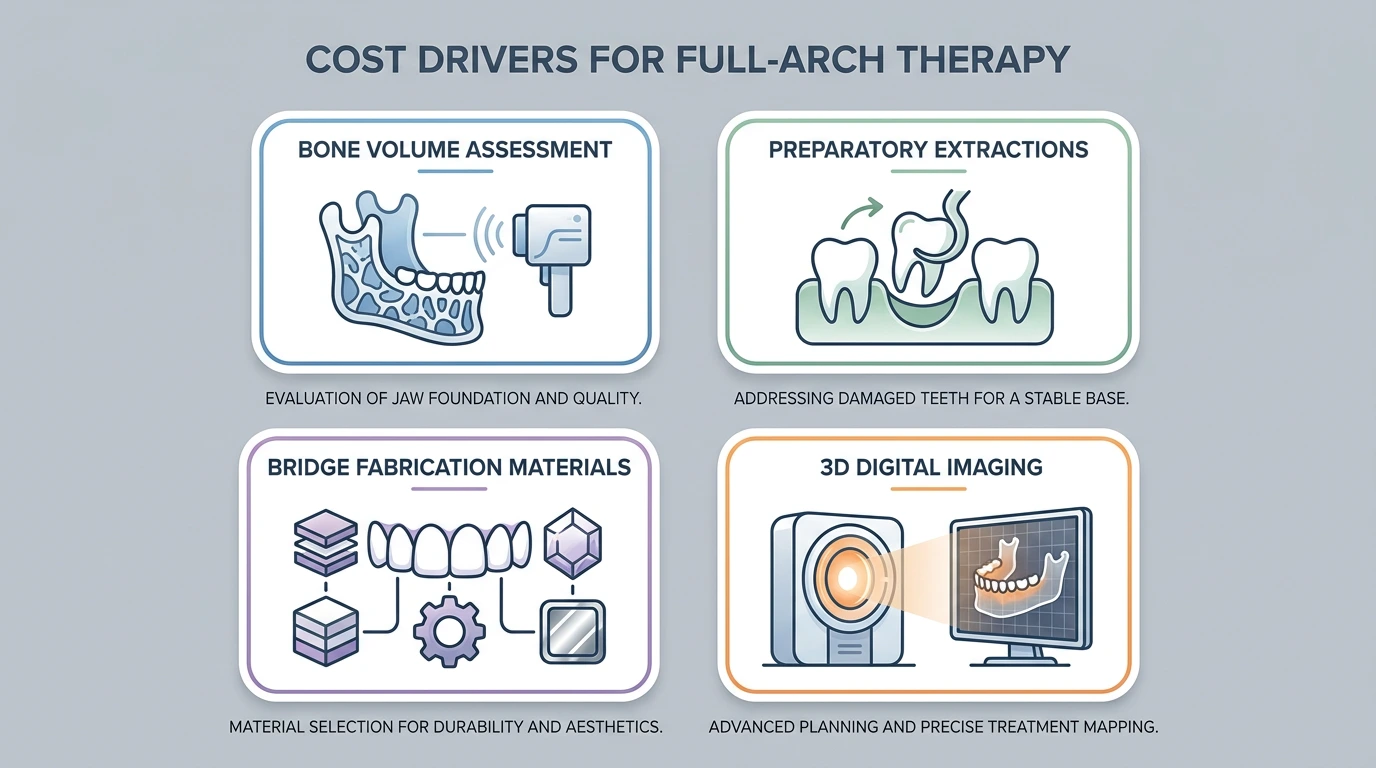
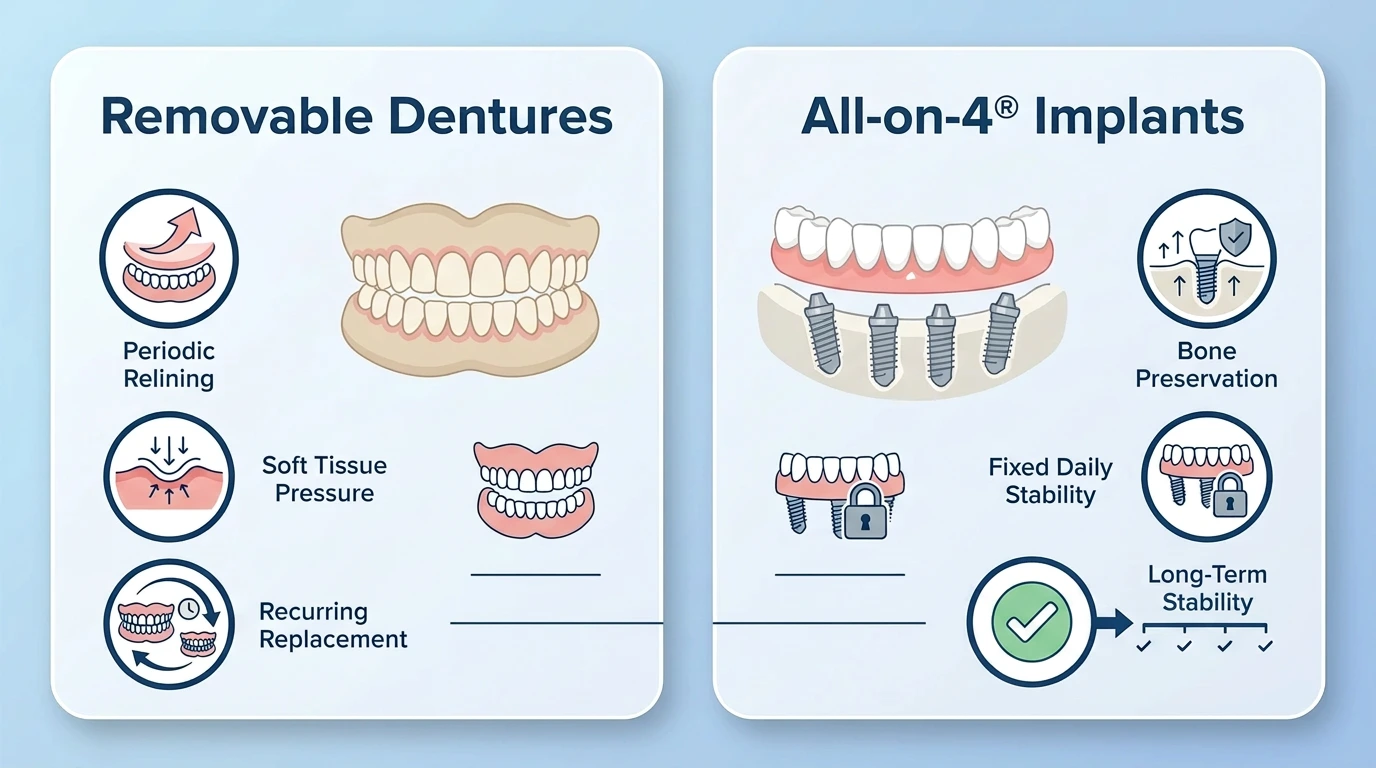
An implant dentures cost comparison depends on whether the appliance is removable or fixed in place. Snap-in dentures use fewer locator attachments and carry lower lab fees, whereas fixed full-arch bridges require precision-milled frameworks and screw retention, reflecting a higher initial investment.
2. Does dental insurance cover All-on-4® surgery?
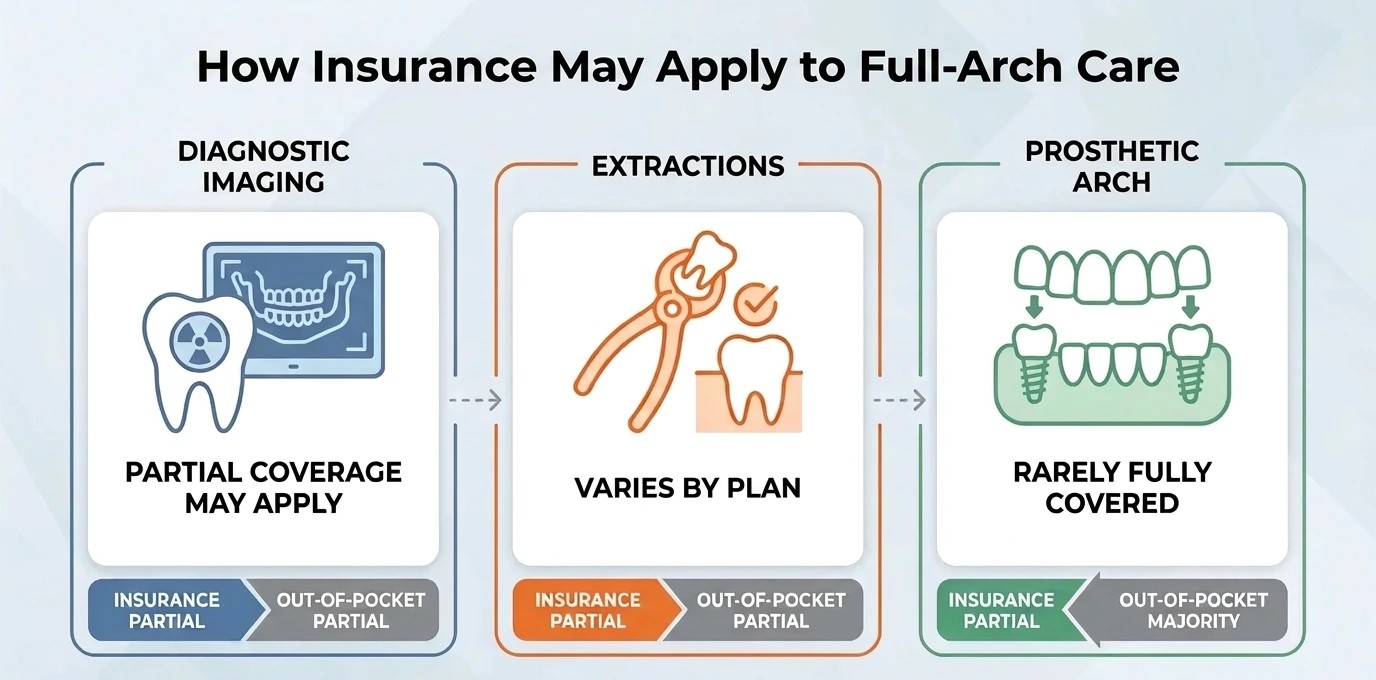
Most standard dental insurance plans offer limited coverage for implant posts, but many contribute toward preparatory procedures, diagnostic imaging, extractions, or the restorative crown arch. Our office helps verify your benefits to optimize your out-of-pocket savings.
3. How long do All-on-4® implants last?
With proper oral hygiene and regular professional cleanings, implant posts can provide long-term functional support. The prosthetic bridge may eventually require maintenance, relining, or replacement over time due to normal biting wear and tear.
4. Is financing available for full-arch tooth replacement?
Yes, flexible third-party financing plans are widely available to help patients break down total treatment costs into predictable monthly payments. Healthcare credit options allow you to access necessary restorative care without delaying treatment.
5. Why is bone density important for All-on-4® candidacy?
Adequate bone volume helps the titanium posts integrate securely with the jaw to support biting forces. The angled placement of the back posts helps make use of existing bone, which can allow some patients with moderate bone loss to qualify.
6. What materials are used for the final prosthetic bridge?
Full-arch prosthetics are typically crafted from high-grade acrylic fused to a titanium support bar or milled from monolithic zirconia. Zirconia offers higher resistance to chipping and staining, though material choices vary based on bite dynamics and aesthetics.
7. Is the procedure comfortable?
Dr. Leeza Stein uses effective local anesthesia to keep patients comfortable during surgery. Post-procedure soreness is normal and manageable with prescribed or over-the-counter pain medications and cold compresses during initial healing.
8. Can I receive replacement teeth immediately after surgery?
In many cases, patients receive a temporary provisional bridge attached directly to the implants on surgery day. This provisional arch allows you to eat soft foods and smile comfortably while bone integration occurs.
9. How do I maintain my full-arch implants?
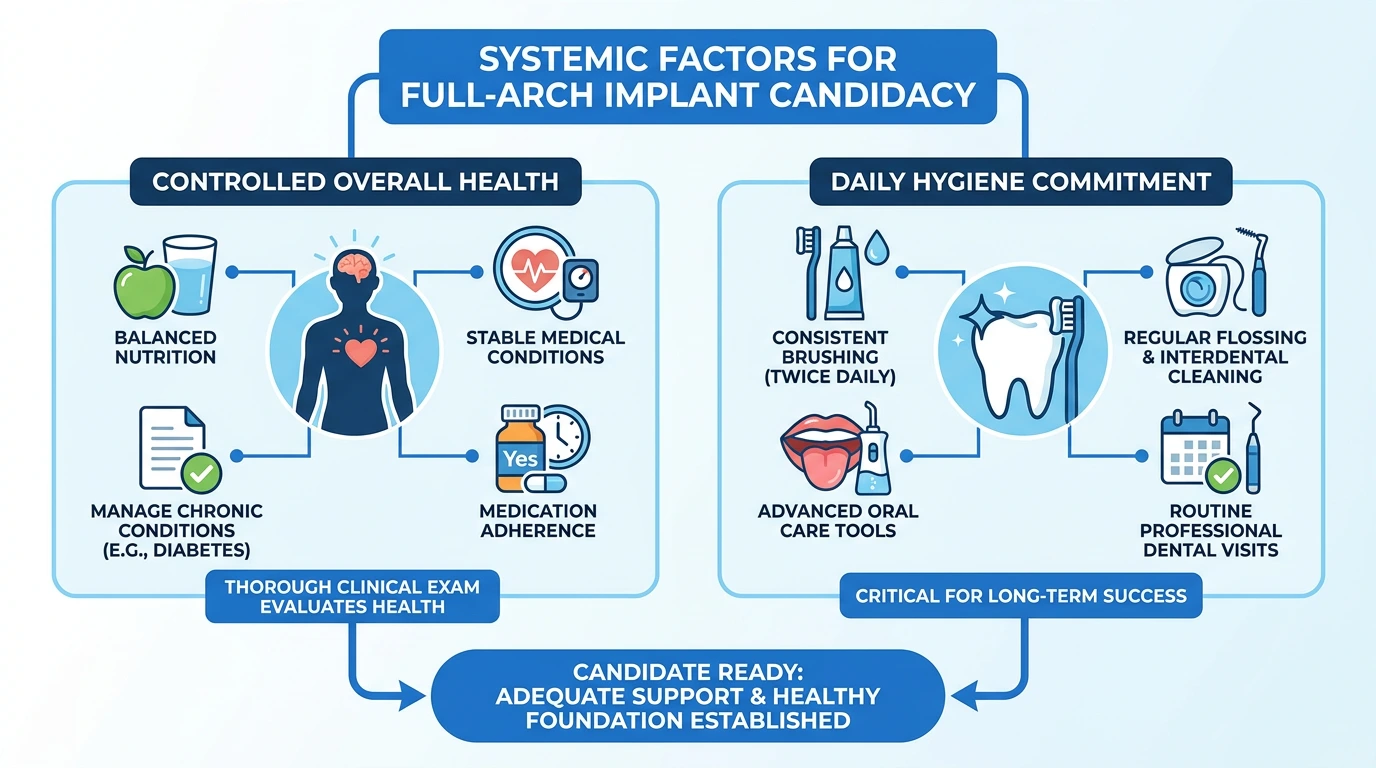
Daily maintenance requires brushing with non-abrasive toothpaste, using specialized floss or water flossers beneath the bridge, and attending regular preventive cleanings & exams to monitor post stability and soft tissue health.
10. What happens if an implant post fails to integrate?
While implant integration rates are high, failure can occasionally happen due to infection, smoking, or excessive movement during healing. If an implant loosens, it is removed, the area is allowed to heal, and a replacement post is placed later.