
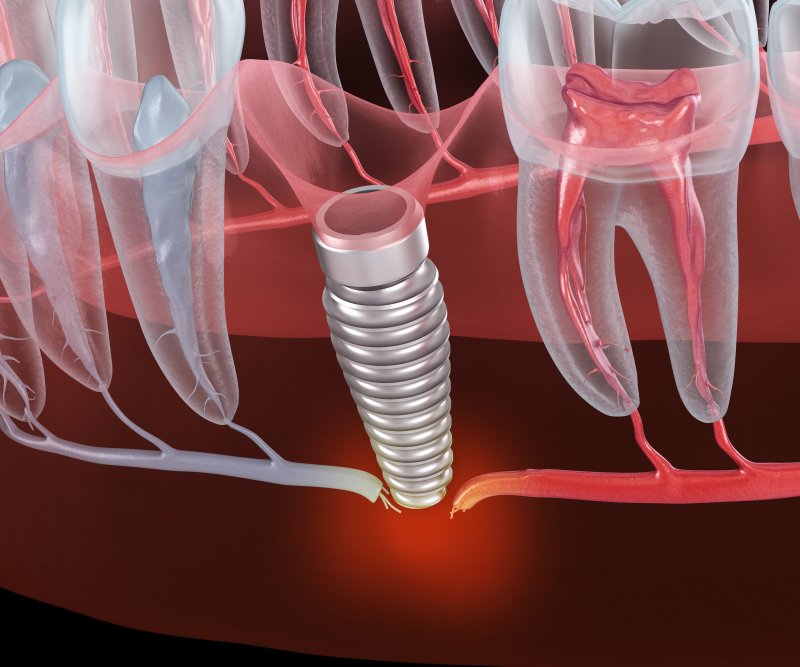
You’ve received your new teeth and are pleased with the results. However, you suddenly feel as if something isn’t right. Your tooth feels loose, and pain is becoming a real issue. If your dentist discovers that there is a problem with your new prosthetic tooth, it may be necessary to take it out. Removing a failed dental implant in Rockwall doesn’t have to be scary though, which is why this article will go over the steps you can expect your dentist to take to ensure a healthier smile.
What Causes Dental Implants to Fail?
From facial trauma and poor initial placement to what is most commonly the culprit – peri-implantitis – there are several reasons a dental implant can fail. It is important to note, though, that this situation is rare, as these prosthetics have a success rate of around 95%.
Peri-implantitis is similar to gum disease and is caused by poor oral hygiene. When receiving your dental implants, your dentist will urge you to maintain good dental health while wearing your new teeth. The reason is that peri-implantitis can form, negatively impacting your gums and ultimately, your dental implant.
If you notice that your gums become tender or red, or that your tooth feels loose, you should not wait to seek professional help. You will need to call your dentist’s office right away. Without proper treatment, this unfortunate situation can lead to bone deterioration, worsening infection, and possible damage to nearby healthy teeth.
How a Failed Dental Implant is Removed
The process of removing a failed dental implant largely depends on how attached it is to your bone. If you developed issues with your tooth in the early stages, after initial placement, there is a good chance it will be easier to extract; however, if you do not notice problems until after osseointegration has occurred, it may require a more complex procedure. Keeping as much of your healthy bone as possible is the most important component, as this serves as the foundation for your new smile.
Removing a failed dental implant requires using specialized instruments that provide enough force without causing serious damage to your teeth, gums, or bone. Using local anesthesia to numb the area and ensure no pain, your dentist will extract the prosthetic before cleaning the area. Should any bone be removed in the process, it may be necessary that you receive a bone graft to help build up the area beneath your gums. Otherwise, you can forgo this step.
Because a bone graft can take several months to completely heal, you will need to wait to receive a new dental implant. During this time, it is a good idea to stop smoking if you currently do, as this can also be a reason for implant failure.
Once you have fully recovered from your procedure, we will discuss whether receiving a new prosthetic is the right course of action to help you smile confidently once again.
About the Author
Dr. Danette McNew has more than 30 years of experience working in the field of dentistry. Using the latest and greatest dental technologies as well as some of the newest techniques, she helps patients achieve their smile goals with greater ease and comfort. Should you or a loved one suffer from a failed dental implant, there is no need to worry, as she and her team can easily remove the tooth and provide effective solutions that will work to repair your smile. Visit our website or call (972) 771-2213 to find out how we can help.