
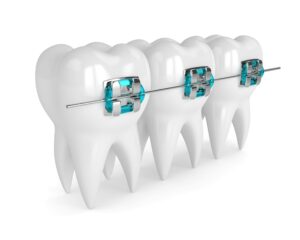
Braces are the tried-and-true method of straightening your smile or repairing a misaligned bite. That said, some patients who have crooked teeth on only the top or bottom may feel that having them installed on all their pearly whites isn’t necessary. Why get them placed on both your upper and lower sets if you only need to straighten one or the other? If you’re wondering whether you can treat only one arch, keep reading to find the answer!
What Are the Benefits of Single-arch Treatment?
Some of the reasons someone may want to have braces on only one set of teeth often include:
- Cost. If you’re only applying braces to half of your mouth, you can save on the cost of treatment.
- Appearance. Many patients feel self-conscious about having metal brackets installed on their teeth and hope to minimize the impact.
- Hygiene. Brushing and flossing around braces can be challenging so reducing the number of brackets simplifies the process.
Can I Get Single-Arch Treatment?
Having single-arch treatment refers to only addressing issues on either your top or bottom set of teeth. In many cases, patients feel self-conscious about their more visibly crooked upper set and only want to straighten those teeth. Other people have overcrowded bottom teeth but have no issues with their top ones. In some cosmetic cases, your dentist might agree to treat only one or the other, but it’s generally not recommended.
Why Isn’t Single-arch Treatment Recommended?
Your upper and lower arch don’t function in isolation. They work together to mash your food for digestion and line up in certain ways so you can form sounds to speak. If you’re only treating one set of teeth or the other, you risk damaging your bite alignment because some of your teeth will shift positions while others stay in place. Over time, repeated motions from biting and chewing will put pressure on those teeth in uneven ways and can eventually push them out of place. That means treating only one arch can cause your remaining pearly whites to become crooked down the road.
Furthermore, a bite misalignment can also result in a temporomandibular joint (TMJ) disorder. Your muscles end up working overtime to overcompensate for a bite issue. As a result, the joint that attaches your jawbone to your skull can become inflamed from the added stress. This can lead to jaw pain, headaches, and even the inability to open your mouth altogether.
In short, it is indeed possible to have single-arch orthodontic treatment, but your dentist may not agree to it. Only they can assess your condition to determine the best treatment plan so that you can have the perfectly straight smile you deserve!
About the Author
From the time that Dr. Leeza Stein started her training at the Texas A&M College of Dentistry, she has prioritized obtaining as much knowledge to help her patients, no matter their needs. As a result, she is familiar with many fields in dentistry, including endodontic (root canal treatment), Invisalign, and treatment planning, and she works with implant specialists in the area that have proven their excellence to ensure success for her patients. Would you like to discuss dental implants or other services with Dr. Stein? Contact LS Smiles online or call the Rockwall office at 972-771-2213 to schedule an appointment.